Uruguay and New Zealand, both recognized for their leadership in tobacco control, are reinforcing a common message that achievements in tobacco control must be accompanied by sustained efforts to safeguard public health policymaking from tobacco industry interference.
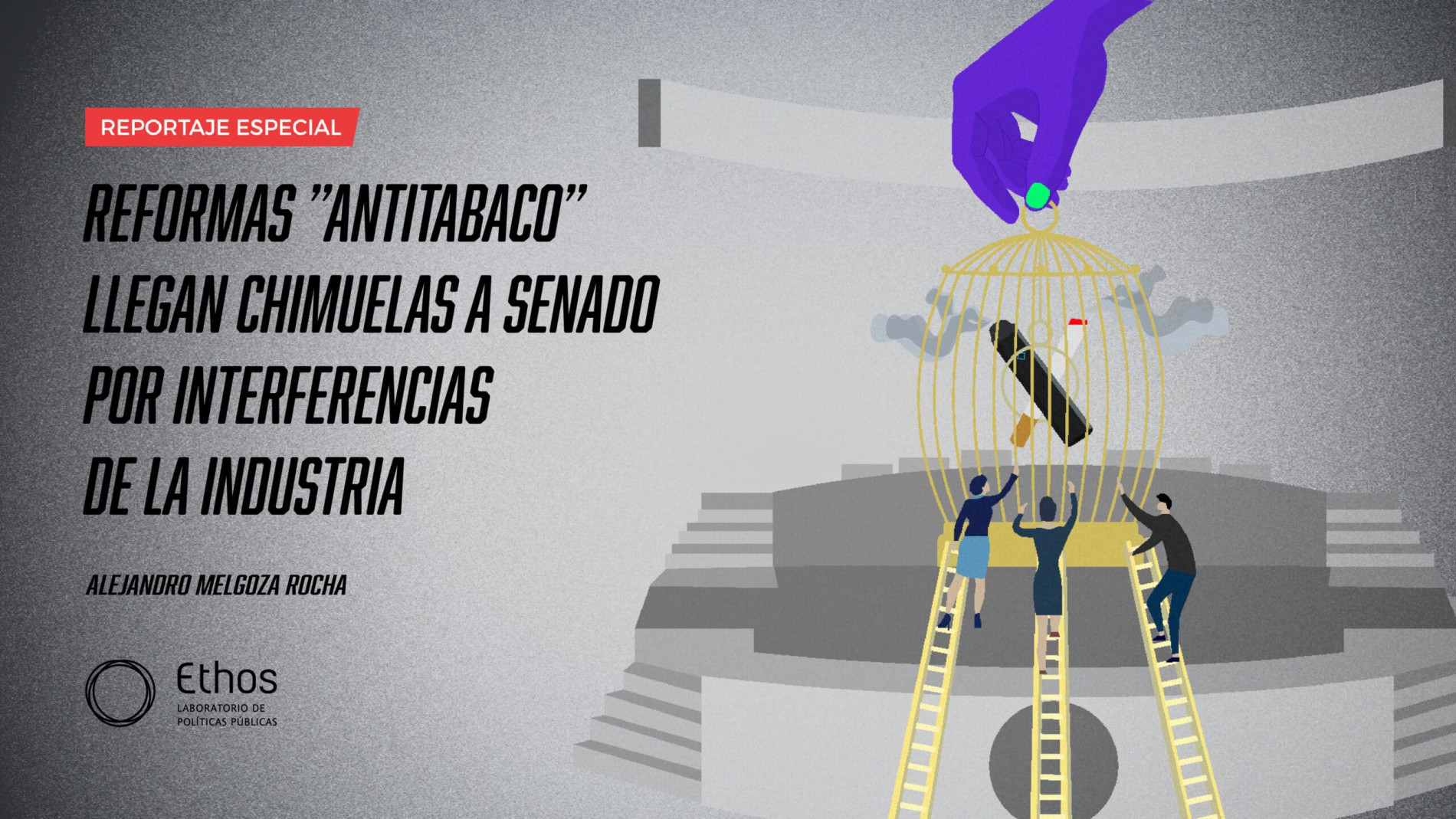
Mexico fell back in the Regional Tobacco Industry Interference Index 2021, placing itself among the Latin American nations where the level of participation of the industry in the development of public policies increased, which contravenes the application of article 5.3 of the Framework Agreement for Tobacco Control of the World Health Organization.
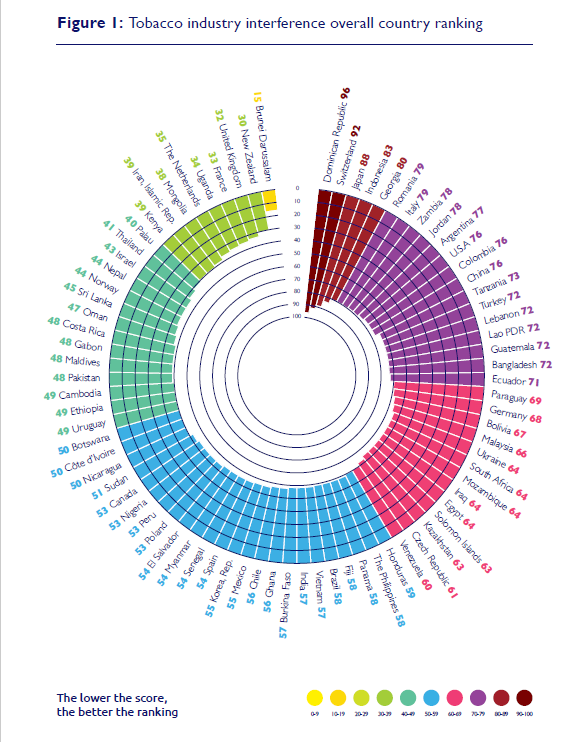
SANTO DOMINGO, RD / HEALTH DRAFTING. - The Dominican Republic ranks 96th out of the 34 countries that have been monitored by the NGO Stopping Tobacco Organizations & Products (STOP) and Corporate Accountability , with the support of the Dominican Foundation for Obesity and Cardiovascular Prevention (FUNDO).
The efforts of governments and public authorities around the world to limit the influence of the tobacco industry have weakened during the coronavirus pandemic, according to the tobacco industry interference index published on November 2, 2021 by the global tobacco industry watchdog body STOP. The year 2020 was marked overall by an upsurge in the tobacco lobby and its influence in political decisions. The authors recommend transposing all of the CCLAT's protective measures in this area into national legislation.
For the third time , the Tobacco Industry Interference Index is presented and this year Mexico's position has worsened compared to other Latin American countries, mainly due to the increased participation of the industry in the establishment and application of public health policies on tobacco control.
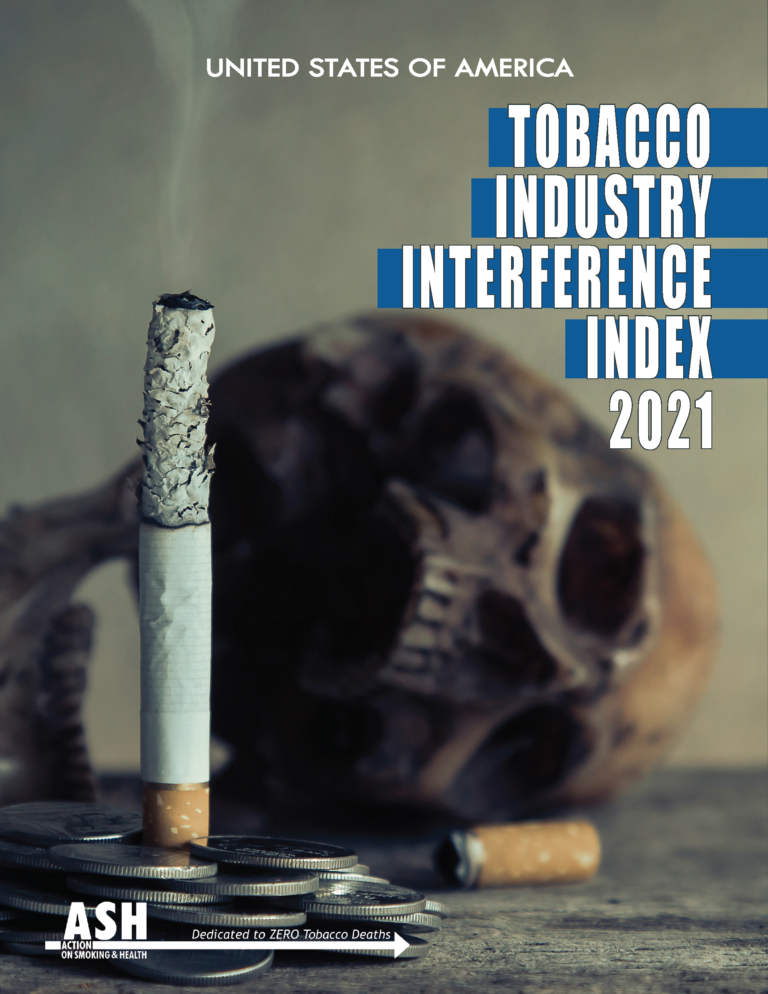
WASHINGTON, DC – November 4, 2021 – Released today, the 2021 U.S. Tobacco Industry Interference Index reveals the U.S. scored a 76 out of 100, reflecting a high level of interference in American public health policymaking by the tobacco industry and their intermediaries. This score places the country among the worst performing countries in terms of shielding itself from tobacco industry interference. The scoring system is based on the World Health Organization Framework Convention on Tobacco Control (FCTC) which outlines the inherent conflict of interest between the goals of tobacco companies and the goals of public health. Parties to the FCTC meet next week for a biennial review of progress toward a tobacco-free world.
Dar es Salaam. Tobacco control campaigners said yesterday that the lack of strong laws against smoking in Tanzania continues to allow harmful consumption of the products, reversing the efforts invested in controlling non-communicable diseases (NCDs).
SANTO DOMINGO, RD.- The Dominican Republic ranks 96 of the 34 countries that have been monitored by the NGO Stopping Tobacco Organizations & Products (STOP) and Corporate Accountability, with the support of the Dominican Foundation for Obesity and Cardiovascular Prevention (FUNDO) .
Dar es Salaam — Tobacco control campaigners said yesterday that the lack of strong laws against smoking in Tanzania continues to allow harmful consumption of the products, reversing the efforts invested in controlling non-communicable diseases (NCDs).
A powerful tool to protect governments from tobacco industry interference remains underutilised, while the tobacco industry stepped up its meddling in health policy during the COVID-19 pandemic. This is the main finding of the Global Tobacco Industry Interference Index (Index) which reviews government efforts in 80 countries to implement Article 5.3 of the WHO Framework Convention on Tobacco Control (FCTC). Article 5.3 is an obligation in the treaty that empowers governments to end the tobacco industry’s decades of manipulation and deceit that derail efforts to protect public health.
Switzerland is in penultimate place in the ranking of the new tobacco industry interference index, and in last place in Europe. This poor score clearly underlines that Switzerland is the European stronghold of the tobacco industry, which finds in this country a very favorable reception to its actions of influence, to the detriment of public health.
Mexico still faces great challenges, especially in terms of public health due to the increase in the participation of the tobacco industry in the establishment and application of public health policies on tobacco control , according to the Tobacco Industry Interference Index .
Despite the mandatory confinement due to the Covid-19 pandemic, Tobacco industry executives and officials led a series of public forums to discuss cigarette smoking.
Tobacco companies in the country increased their interference in the creation of public policies, revealed the Regional Report Interference of Tobacco Companies in Mexico .
The tobacco industry used the Covid-19 pandemic as an opportunity to gain influence in the governments of 80 countries, which were vulnerable to lobbying and charitable donations from those companies, according to a report published yesterday by the control group STOP. (Stopping Tobacco Organizations and Products) an alliance funded by Bloomberg Philanthropies.
A new report from tobacco industry watchdog STOP suggests that the tobacco industry embraced the Covid-19 pandemic as an opportunity to gain influence, sway health policies and secure preferential treatment. Reports from civil society organizations in 80 countries, analyzed in the Global Tobacco Industry Interference Index 2021, show that no country was immune to the industry’s efforts to use lobbying and donations, often connected to the pandemic response, to its advantage.
Nairobi, Kenya | Xinhua | The manufacturing, sale and consumption of tobacco products in Africa should be regulated in order to limit threats to public health and safety, campaigners said on Tuesday.
Leonce Sessou, executive secretary of African Tobacco Control Alliance, stressed that enactment of laws and public education is required to curb unhealthy use of tobacco products like cigarettes in a rapidly urbanizing continent.
When Dr. Frank F. Tylecote discovered the first cancer-causing evidence for tobacco and published it in the scientific journal The Lancet in 1925, the tobacco industry undertook a publicity strategy to counter the finding: he promoted the smoker's lifestyle as something positive through magazines, movies, athletes and even during warlike moments like World War II. He also began lobbying with public officials.
Mexico has worsened compared to other Latin American countries, in the third Interference Index of the Tobacco Industry, due to the increase in the participation of companies in the establishment and application of public health policies on tobacco control, affirmed representatives of Civil society organizations.
The tobacco industry used the COVID-19 pandemic as an opportunity to gain influence in the governments of 80 countries, which were vulnerable to lobbying and charitable donations from those companies, according to a report published Tuesday by the watchdog group, STOP.