Uruguay and New Zealand, both recognized for their leadership in tobacco control, are reinforcing a common message that achievements in tobacco control must be accompanied by sustained efforts to safeguard public health policymaking from tobacco industry interference.
Egypt is launching the “Tobacco 2019” report, this evening, Tuesday, through the Zoom electronic application, “in view of the precautionary measures for the Corona virus,” as well as the “Egypt Tobacco Observatory,” which is the first observatory of its kind working in this field in Egypt and the Middle East, and the fourth in the world. .
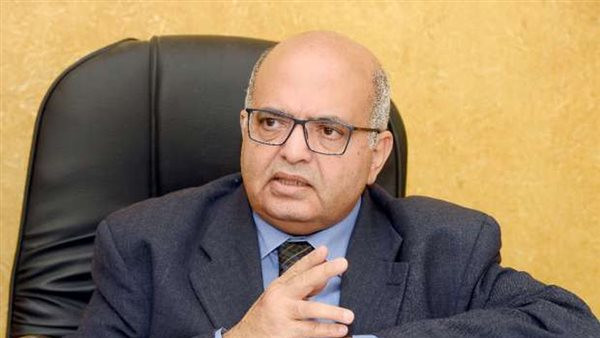
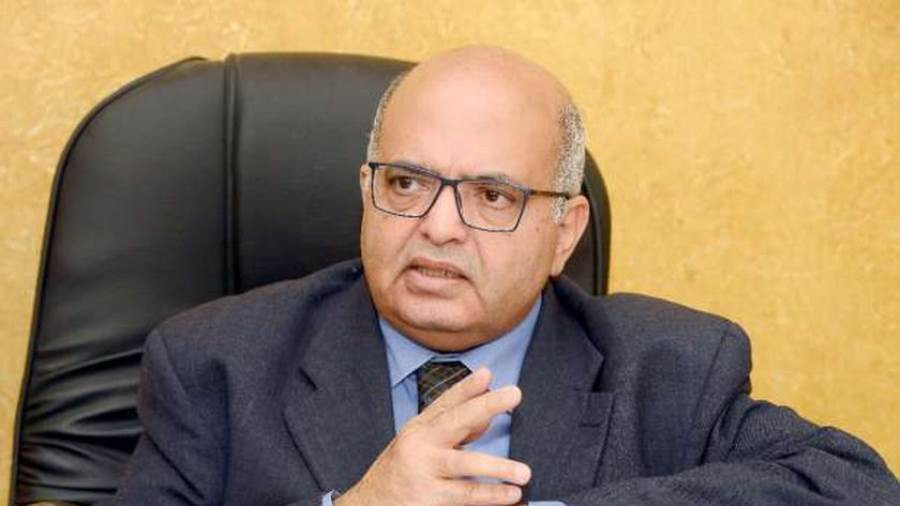
Dr. Essam El-Maghazi, head of the Anti-Smoking, Tuberculosis and Chest Diseases Association in Cairo, said that one of the most important methods adopted by tobacco companies is their exaggeration in maximizing the economic return of this industry, and that it contributes to the economic support of societies, and the pressures that this poses on different governments, but it It ignores talking about the losses incurred by these societies, as a result of the harms of smoking, whether it is exorbitant money spent on public health, which exceeds all imaginations, or the collapse of human forces that depend on smoking in their daily lives in the long run.
Dr. Doaa Saleh, coordinator of the Framework Convention on Tobacco Control 2030 project, said that Egypt was chosen among 15 countries to provide support for the implementation of the Framework Convention on Tobacco Control, and was chosen for this project because it presented a strong strategy to combat it, and became a political commitment to implement the terms of the agreement.
Fatima Al-Awa: Tobacco companies are working to weaken the field of tobacco control
Dr. said. Fatima Al-Awa, Adviser to the Tobacco Control Initiative, Regional Office of the World Health Organization, said that each country party to the Framework Convention on Tobacco Control adheres to some measures to control tobacco, and there is great hope that the Egyptian Observatory for Tobacco Control will detect the interventions of tobacco companies to promote their industry, circumvent them and penetrate them in the field of tobacco control.
Dr. Essam al-Maghazi, President of the Association Against Smoking, tuberculosis and chest diseases in cairo, stressed that the 2019 egypt tobacco control report highlights the ability of governments to resist the destructive movements of the tobacco industry.
Dr. Fatima al-Awa, advisor to the tobacco control initiative at the who regional office, said that each country party to the framework convention on tobacco control is committed to some tobacco control measures, and there is great hope that the egypt tobacco control observatory will detect tobacco companies' interventions to promote their industry, circumvent them and penetrate into weakening tobacco control.
Dr. Essam al-Maghazi, president of the association against smoking, tuberculosis and chest diseases in Cairo, stressed that the 2019 Egypt tobacco control report highlights the ability of governments to resist the destructive movements of the tobacco industry.
This report relies on publicly available information, in newspapers, magazines and the internet, as well as the websites of tobacco companies, and the index scores range from 0 to 100, based on the assessment of seven key areas, relating to the extent to which cigarette companies intervene, to bypass anti-smoking policies, and the lower the index score, this is evidence of the extent to which governments are able to resist the intervention of the tobacco industry.
There was a time when tobacco companies could market their deadly and addictive products with cartoon characters, svelte women and handsome Cowboys. Decades later, with growing evidence and public awareness of the harms of tobacco use, such unscrupulous advertising has been outlawed in many countries. Now, there is increasing evidence that the purveyors of cigarettes and other tobacco and nicotine products look hungrily at Africa, a region ripe for expanding demand for their products.
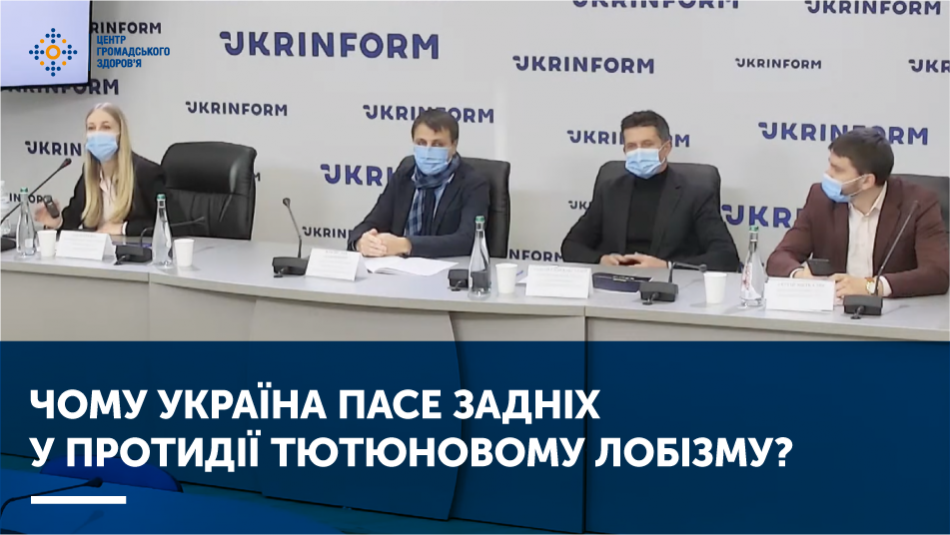
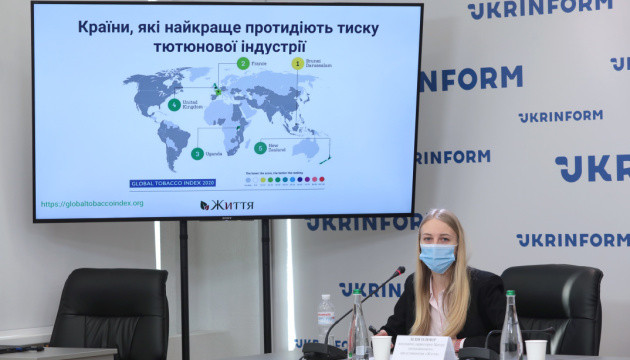
On November 30, Ukrinform hosted a presentation of the second Global Index of Tobacco Industry Interference in Healthcare Policy. Ukraine with 68 points took 27th place out of 33 in the ranking. This figure is worse than the previous report for 2017-2018, when the result was 61 points.
Ukraine ranked 27th in the global ranking of the Tyutyun Industry's involvement in health protection policy. We have seized one of the last days, thus becoming an anti-application for the whole world!
Ukraine ranked 27th out of 34 places in the ranking on this index, receiving 68 points. This figure is worse than the previous report, which covered 2017-2018, when the result was 61 points.
On November 30, Ukrinform presented the second Global Index of Tobacco Industry Intervention in Public Health Policy. Ukraine ranked 27th out of 34 places in the ranking on this index, receiving 68 points. This figure is worse than the previous report, which covered 2017-2018, when the result was 61 points. According to the research methodology, the higher the score, the stronger the intervention of the tobacco industry. The highest scores and, accordingly, the worst situation with the intervention of the tobacco industry were in Japan (88 points), Indonesia (82 points), Zambia (78 points), and the lowest scores were given to the State of Brunei Darussalam (14 points), France (27 points), the United Kingdom (32 points), where governments more effectively counteract tobacco companies.
La industria tabacalera (IT) está utilizando la pandemia de la COVID-19 para aumentar su influencia en América Latina con prácticas como la venta de productos novedosos, las actividades de “responsabilidad social empresarial” (RSE) y el cabildeo contra la subida de impuestos.
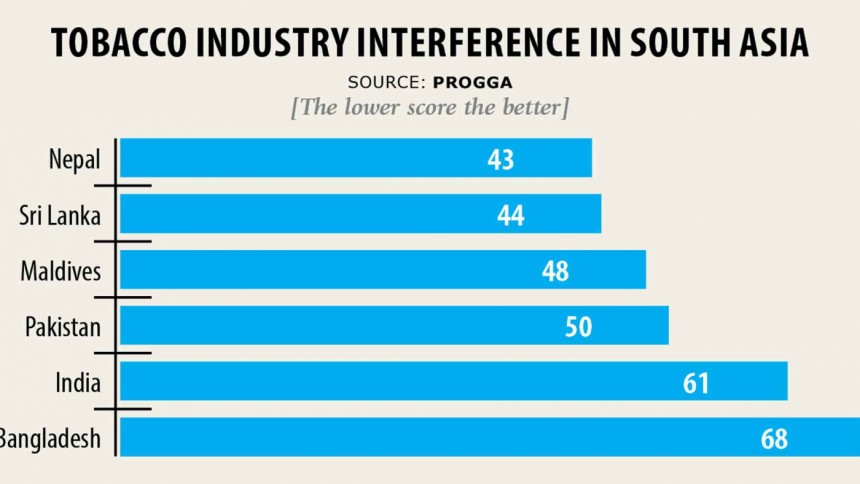
Bangladesh is still highly susceptible to interference from the tobacco industry as the country scored 68, the highest among its South Asian peers, in the Tobacco Industry (TI) Interference Index 2020, according to anti-tobacco campaigner PROGGA.
Bangladesh has scored 68 in the tobacco industry interference index 2020, which means that the country is still highly vulnerable to the interference of the tobacco industry, said a study.
Speakers at a study unveiling programme urged the government to stop tobacco industries interference in the policy making about tobacco control law amendment process.
Tariffs on tobacco products are being increased in the budget every year to reduce the use of tobacco to zero by 2040. Tobacco use is not declining even after such a policy decision of the government. Instead, tobacco companies are increasing their promotion and sales with new techniques.
The research and advocacy organization Pragya (Knowledge for Progress) and the Anti-Tobacco Media Alliance (Atma) have reported that tobacco companies are still the most involved in Bangladesh in South Asia.
Tobacco companies have been able to make full use of the ongoing Kovid-19 epidemic. It was also informed that they have been able to avail various business benefits in collaboration with the policy makers and the administration mainly on the pretext of social responsibility (CSR) program.
Bangladesh is still highly vulnerable to the interference of tobacco industry, according to a study report revealed on Saturday.Tobacco companies have managed to exploit the ongoing Covid-19 pandemic to the fullest for their benefit. The tobacco companies have particularly used their Corporate Social Responsibilities (CSR) as a pretense to infiltrate into policymaking and administration and extract a variety of benefits, the study says. The study report titled 'Tobacco Industry Interference Index: FCTC Article 5.3 Implementation Report, Bangladesh', was disclosed here at a webinar, jointly organized by research and advocacy organization PROGGA (Knowledge for Progress) and Anti-Tobacco Media Alliance (ATMA), reports UNB.