
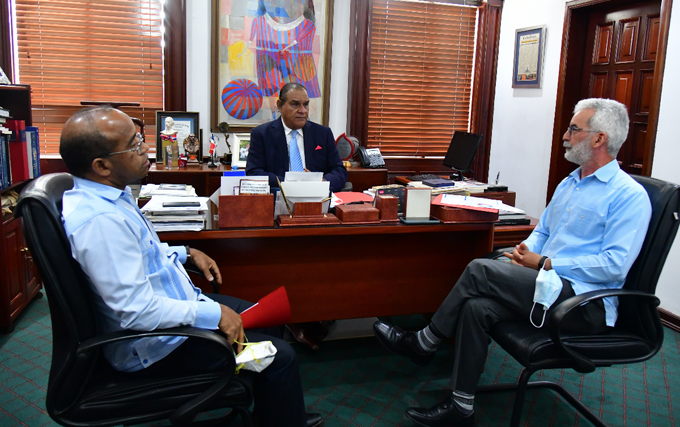
Cardiologists are Alarmed at Increase in Deaths from Tobacco
19% of the 260 deaths from cancer that the country registered in 2019 were related to tobacco use, as well as 800 deaths from chronic lung diseases.
listindiario.com
19% of the 260 deaths from cancer that the country registered in 2019 were related to tobacco use, as well as 800 deaths from chronic lung diseases.
listindiario.com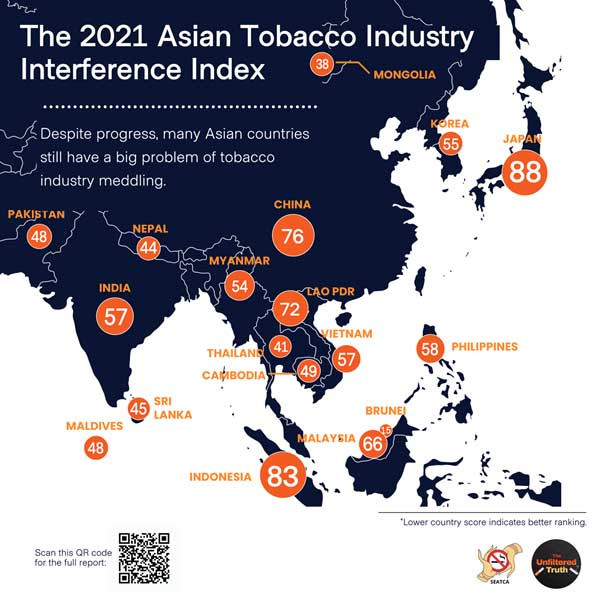
BANGKOK, Thailand, Dec 3 2021 (IPS) - Almost two years into the COVID-19 pandemic, many countries in the developing world continue to grapple with basic issues such as securing sufficient vaccines and providing essential medical care for their sick. Many economies are in recovery mode as governments scramble to resuscitate them with recovery packages and build back better plans.
www.ipsnews.net
Tobacco Free Association of Zambia says it is deeply concerned with the interaction and commitments made by government towards the growth of the tobacco industry.
atca-africa.org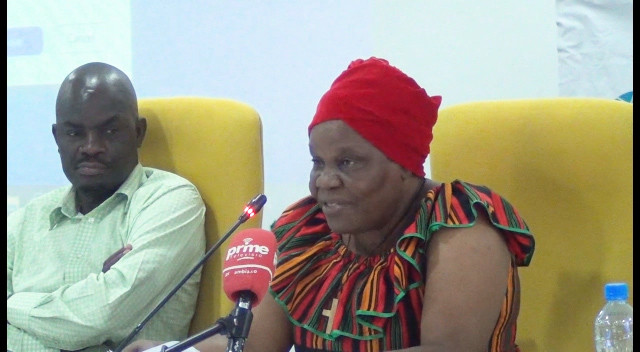
A civil society report 2021 on tobacco industry interference index, which reviews the country’s response to protecting health measures from commercial and other vested interest, has revealed that Zambia has performed poorly.
www.qfmzambia.com
A new report has outlined the extent to which tobacco companies used the COVID-19 pandemic to engage with relief efforts, form relationships with government figures, and attempt to influence policy. The Global Tobacco Industry Interference Index 2021 is produced by the Global Centre for Good Governance in Tobacco Control, a partner of STOP, a tobacco industry watchdog. Notably, at least ten countries designated tobacco products as essential goods during the pandemic. Guatemala, Tanzania, and Zambia delayed introducing or implementing tobacco control legislation. Argentina and the Dominican Republic reduced tobacco taxes. South Korea's Ministry of Gender, Equality and Family awarded the country's largest cigarette firm the “Prime Minister Prize for ‘Family-friendly Company’”.
www.thelancet.com
Bangladesh scored 72 out of 100 in the Global Tobacco Industry Interference Index 2021 -- a four-point downgrade from the previous year's performance in measuring the tobacco industry's influence.
www.thedailystar.net
The incessant interference from tobacco industry which has played roole in marketing of the tobacco products indirectly, has put the public health of Bangladesh under substantial risk. The country's score in the 2021 Tobacco Industry Interference Index stands at 72 which was 68 last year. The increase in score suggests a worsening trend in terms of tobacco industry interference.
www.daily-sun.com
Bangladesh has made very poor performance in the Global Tobacco Industry Interference Index. The incessant interference from tobacco industry has put the public health of Bangladesh under a greater risk as the country's score in the 2021 Tobacco Industry Interference Index stands at 72 which was 68 last year, as per a study.
www.dhakatribune.com
The incessant interference from tobacco industry has put the public health of Bangladesh under a greater risk as the country's score in the 2021 Tobacco Industry Interference Index stands at 72 which was 68 last year, as per a study. PROGGA, a research and advocacy organisation conducted the study titled 'Tobacco Industry Interference Index: The FCTC Article 5.3 Implementation'.
thefinancialexpress.com.bd
A coalition of universities and civil organizations did the survey on 18 countries. The States of the Dominican Republic, Argentina and Colombia are the three that suffer the most interference from tobacco companies to protect public health
www.infobae.com
For civil society organizations, the case shows the incidence of the industry in politics and contradictions within the MSP.
ladiaria.com.uy
Recently, the presentation of the results of the Second Interference Index of the Tobacco Industry in Latin America 2021 was carried out, in which Colombia received a score of 76, being the third that registers the highest interference in the industry, only surpassed by the Dominican Republic with 96 and Argentina with 77. Below are countries such as Guatemala, Ecuador, Paraguay and Bolivia. At the world level, Colombia is in the penultimate group of those with the worst results.
www.elquindiano.com
The Corporate Accountability and Public Participation Africa (CAPPA) has called on all relevant stakeholders to take stronger actions against tobacco industry in Nigeria, for what it tagged its unnecessary interference in tobacco control policies, and unlawfully embarked on Corporate Social Responsibility (CSR) activities in clear contravention of Nigerian laws.
www.thisdaylive.com
Recently, the presentation of the results of the Second Interference Index of the Tobacco Industry in Latin America 2021 was carried out, in which Colombia received a score of 76, being the third that registers the highest interference in the industry, only surpassed by the Dominican Republic with 96 and Argentina with 77. Below are countries such as Guatemala, Ecuador, Paraguay and Bolivia. At the world level, Colombia is in the penultimate group of those with the worst results.
www.elquindiano.com
The results of the Second Interference Index of the Tobacco Industry in Latin America 2021 were presented, with a discouraging outlook for the country.
www.laopinion.com.co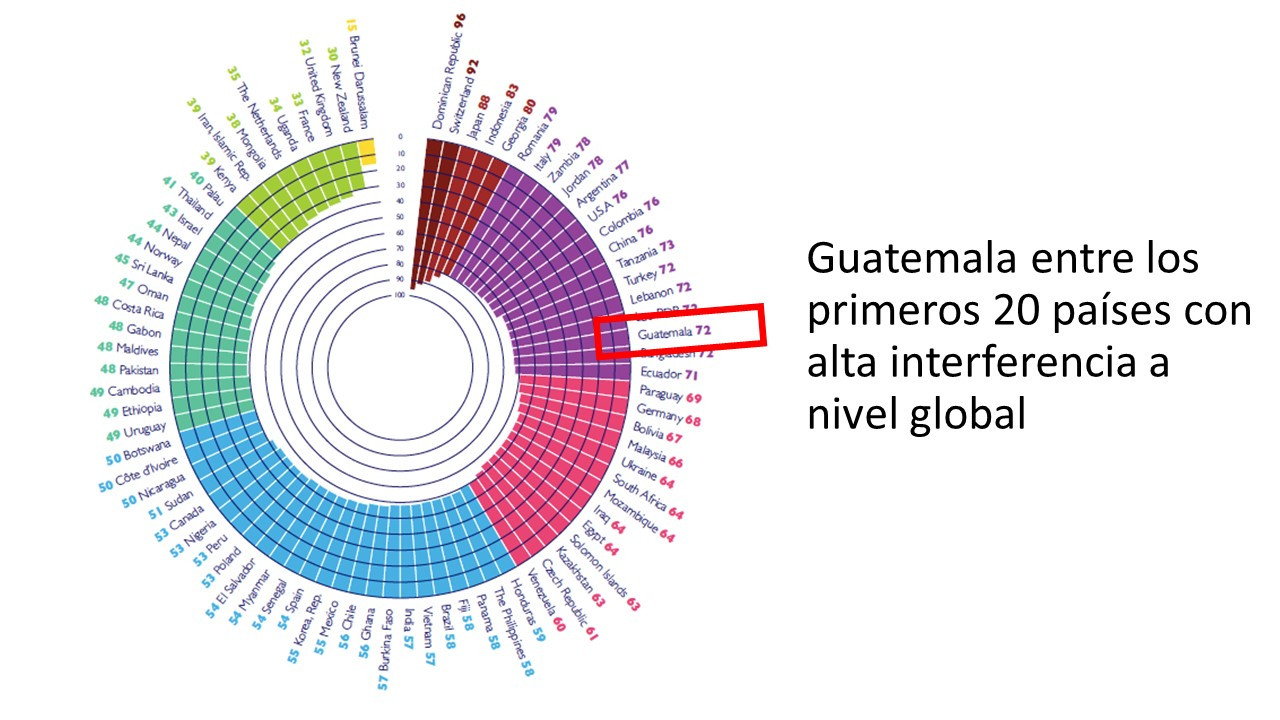
With the COVID-19 pandemic, tobacco control took a back seat in the world and made no progress. Since smoking is a risk factor for the disease, it is an opportune time for policy makers to reduce the number of smokers and thus protect public health by strengthening tobacco control measures.
crnnoticias.com
For the first time, Mexico left the list of corruption to delay laws against the harmful consumption of cigarettes, carried out by the Regional Interference Index of the Tobacco Industry for Latin America, however, it must still regulate the activities of Corporate Social Responsibility (CSR ) in which they promote and market new nicotine products. https://www.milenio.com/politica/mexico-sale-lista-paises-corrompidos-industria-tabacalera
www.milenio.com
SANTIAGO, RD / DIARIO DE SALUD . - Alarmed by the results of the Tobacco Industry Interference Index 2021, in which the Dominican Republic was in position 80 out of 80 participating countries, the Dominican Anti-Smoking Alliance (ADAT), assumes that there is no intention of the government to regularize the tobacco use.
www.diariodesalud.com.do
At the ninth session of the Conference of the Parties to the World Health Organization's Framework Convention on Tobacco Control, or COP 9, countries have adopted a proposal to set up an investment fund that would help generate additional resources for tobacco control.
www.devex.com
MONTEVIDEO (Uypress) - Today the Second Interference Index of the Tobacco Industry in Latin America 2021 was presented, for the second consecutive year, coordinated by Corporate Accountability in collaboration with STOP, an organization that controls the tobacco industry at the level of international..
www.uypress.net